Featured Article
History of Ceylon Tea
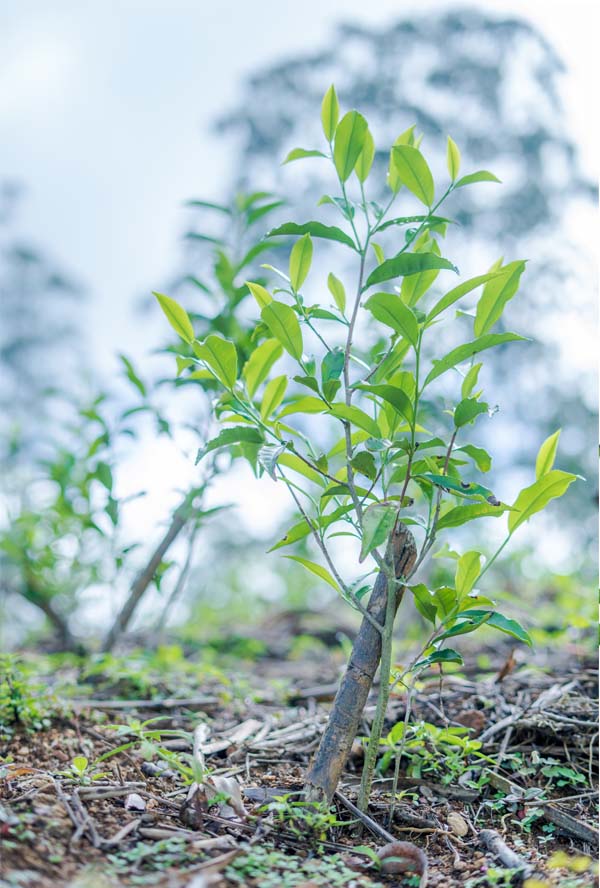
It was during the British era that tea first began to be cultivated and manufactured here. The story of “Ceylon Tea” began with Coffee, that had already been found growing naturally in the central hill country. The British Governor Sir Edward Barnes, a British Army Officer who served the country from 1820 - 1831 offered the official support for large scale coffee cultivation, such as land for cultivation, infrastructure like network of roads etc., and funds allocated for research & experiments in coffee growing. In the 1870’s, coffee plantations were destroyed by a fungal disease called Hemileia Vastatrix, better known as coffee leaf disease. The death of the coffee industry paved the way to experiment with Cocoa and Cinchona as alternative crops but failed due to an infestation of a disease. In 1824, a tea plant was brought to Ceylon by a British from China and was planted in the royal Botanical Garden in Peradeniya for experimental purposes. Further, tea plants were brought from Assam and Calcutta in India to Peradeniya in 1839. The first commercial cultivation of Tea commenced in 1867 by the British replacing coffee, thereby paving the way to a crop which produces a beverage that would be loved and treasured by people all over the world.
James Taylor, a Scotsman turned planter known as the father of Ceylon Tea, arrived in the country in 1852, at the age of 17. Taylor over the years experimented in growing tea, was mainly responsible for undertaking the first commercial tea plantation in the country, in a 19-acre plot in “Loolecondera” estate in Hewaheta in the Kandy district. His enterprising efforts were followed by many other pioneers who not only contributed for tea growing but also helped create the infrastructure, which contributes to facilitate the supply chain of this great industry.
For over one hundred and fifty years, the tea industry sustained Sri Lanka’s economy and till to-date continues to contribute significantly towards it and is one of the foreign exchange earners for the country, generating over US$ 1.5 billion per annum. The tea industry also supports approximately 15% of the country’s population through direct and indirect employment. Tea contributes 15% of the country's foreign exchange earnings and generates 65% of export agriculture revenue. As the industry grew over the years, Ceylon Tea gained the reputation of being the finest beverage in the world. Independence to Ceylon brought new markets and production continued to increase and in 1965, Sri Lanka became the world’s largest Tea exporter. And to this day, Sri Lanka remains one of the largest Tea exporters to the world.

Featured Article
Black Pepper
Pepper, known as the king of spices, is one of the oldest and the most consumed spice in the world. It is taken from the berries of the plant Piper Nigrum and was originated in the Malabar Coast in the Indian state of Kerala, from where it was traded in ancient times. Ancient Roman cookbooks were probably compiled in the 1st century AD and had recipes that include black pepper. Arab merchants had the monopoly of pepper trade for centuries and were traded into Europe and Central Asia. In Sri Lanka, it is cultivated as a monocrop, mixed crop in coconut and tea plantations and home gardens, using live stands as a support. It is a woody perennial climbing vine cultivated over an area of 32,000 hectares. Sri Lanka produces approximately 25,000 metric tons of pepper to satisfy 2-3% of the global demand. Ceylon black pepper is known for its superior quality, as it is quite rich in alkaloids which lends to a distinct pungency, and as a result Pepper from Sri Lanka fetches a premium price in the international market. The taste of Sri Lankan black pepper is richly aromatic, while retaining a strong pungency. Pepper is used mainly in the culinary industry as a finishing touch on dishes to add flavor and aroma to meat, fish and vegetables. It is also used in the pharmaceutical and perfumery industry. Sri Lanka pepper is available in whole black pepper, ground powder, and essential oil.
Types of pepper production depend on the time of harvesting and post-harvest process, and the types available are black pepper, red pepper & white pepper. To produce black pepper berries of the plant are harvested when green and slightly immature, then blanched and sun dried. The black color because of oxidation occurs during drying and is very rich in essential oil. Piperine, the plant compound in it has strong antioxidant properties. Black pepper is a warming spice according to Ayurveda and has been using them for thousands of years. Patients suffering from diarrhea, constipation, arthritis, pulmonary and cardiovascular troubles have been treated with black pepper extracts. Alkaloid components available in pepper have associations with many health benefits, including inflammatory effects and potential cancer fighting properties.

Featured Article
Difference between Black, Green & White Tea
Tea, a delectable beverage, has captivated the world with its rich flavor, aroma and appearance for centuries. From the leaves of this wonder plant, different types of teas are produced, each shaped by the rich traditions bringing their unique characters and captivating stories to your cup. Among its various forms, black, green and white tea stands out as the most popular among tea lovers around the world. Some of us like black tea while others like green tea. There are these white tea lovers. Now, how many of us really know the difference between these three types of tea? The answer is that many of us truly don’t know.
Black Tea
The most common tea variety makes up around 90 percent of the tea consumed all over the world. Black tea leaves are fully oxidized, a reaction that occurs when plant enzymes are exposed to oxygen, making the brewed teas dark brown in color and higher in caffeine. Black tea leaves are thinner and smaller than the other varieties, are known for their superior depth in flavor and aroma. This type of tea is often enjoyed with milk. Black tea contains antioxidants that can offer various health benefits such as maintaining optimal blood glucose level, improving cholesterol and decreasing blood pressure.
Green Tea
The significant difference is that it’s unique method of processing that causes oxidation to halt. This stopping oxidation preserves green and leafy appearance of green teas, making higher in antioxidant levels. The process also inhibits the development of caffeine, so that green teas are often known as the healthy tea of choice. Different countries use their own methods in drying during the production of green teas, giving each variety its own unique flavor and appearance. Green tea is rich in antioxidants, particularly catechins which have been linked to various health benefits including heart health and cancer prevention.
White Tea
The least processed tea variety, and the most popular includes Silver Tips and Golden Tips. Tender tea shoots that are at the top of the tea bush are hand plucked and then gently dried in the open air. After picking, the young tea leaves are put on wilt for several days, then dry them in the sunlight. White teas are light in color and often leafy in appearance. They are usually the most delicate variety in taste and aroma and are nutrient rich and low in caffeine. White tea also contains antioxidants and has been linked to health benefits like reducing the risk of heart disease.

Featured Article
Tea Tasting
Tea tasting, like the Wine tasting, is a systematic process in which a trained taster determines the value of a particular tea based on the flavor, aroma and appearance. These three characters will defer due to prevailing climatic condition, topography, manufacturing process and the type of green leaf used for manufacturing. A trained Tea taster can ascertain the quality of the final product and value it.
5 minutes brewing time and boiling water is recommended for black tea and 3 minutes brewing time and less than 90 degrees Celsius is recommended for green tea. Taster uses a large spoon for tasting and taster may deal with several tea samples in a day. He takes the liquid into his mouth, ensuring that the tea and plenty of Oxygen is passed over the taste receptors on the tongue. While it is mainly the tongue that experiences taste, other surfaces of the mouth also play a role here. There are four kinds of tastes - salt, sour, sweet and bitter. Sweetness is tasted at the tip of the tongue, and bitterness at the back. Saltines too are tasted at the tip, but also at the sides of the front of the tongue. Sourness is experienced at the back edges. A stringency or pungency is a sensation, not a taste that is felt on the gums and part of the cheek. When the liquor is swirled round the mouth, the thickness, body or viscosity is felt and judged. For tasters, “infused” leaf refers to the wet leaf left over after the liquor is drained out; “infusion” refers to the liquor. The flavor characteristics and indeed leaf color, size and shape are graded using a specific language created by the tea industry to explain the overall quality.
Tea tasting is a precise skill and one that can be performed only with a good natural palate and active olfactory nerve. Apart from tasting and describing tea, the ability to value a tea calls for long experience and knowledge.
Tea Tasting Terminology
Specialized vocabulary created by the tea industry to explain and evaluate overall quality across every stage of tasting:
- Black: A black appearance is desirable.
- Blackish: A satisfactory appearance.
- Bold: Particles of leaf which are too large for the grade.
- Brown: A brown appearance in tea that normally indicates overly harsh treatment of the leaf.
- Clean: Leaf that is free from fiber, dust and all extraneous matter.
- Curly: The leaf appearance of whole leaf grade teas such as O.P., as distinct from “wiry”.
- Even: True to the grade, consisting of pieces of leaf of fairly even size.
- Flaky: Flat, open and often light in texture.
- Gray: Caused by too much abrasion during sorting.
- Grainy: Describes primary grades of well-made CTC teas such as Pekoe Dust.
- Leafy: A tea in which leaves tend to be on the large or long side.
- Light: A tea light in weight, of poor density. Sometimes flaky.
- Make: Well-made tea (or not), true to its grade.
- Musty: A tea affected by mildew.
- Neat: A grade having good “make” and size.
- Powdery: Fine light dust.
- Ragged: An uneven, badly manufactured and graded tea.
- Stalk & Fiber: Should be minimal in superior grades but is generally unavoidable in lower-grade teas.
- Tip: A sign of fine plucking, apparent in top grades of orthodox “Low Grown Type Teas”.
- Uneven & Mixed: “Uneven” pieces of leaf are usually indicative of poor sorting and not true to the grade.
- Well Twisted: Used for describing whole-leaf grades, often referred to as “well-made” or “rolled”.
- Wiry: Leaf appearance of a well-twisted, thin-leaf tea.
- Aroma: Smell or scent denoting “inherent character,” usually in tea grown at high altitudes.
- Bright: A lively bright appearance. Usually indicates bright liquors.
- Coppery: Bright leaf that indicates a well-manufactured tea.
- Dull: Lacks brightness and usually denotes poor tea. Can be due to faulty manufacture and firing, or a high moisture content.
- Dark: A dark or dull color that usually indicates poorer leaf.
- Green: When referring to black tea, it refers to under-fermentation or to leaves from immature bushes (liquors often raw or light). It can also be caused by poor rolling.
- Mixed or Uneven: Leaf of varying color.
- Bakey: Over-fired liquor. Tea in which too much moisture has been driven off.
- Body: Liquor having both fullness and strength, as opposed to being thin.
- Bright: Denotes a lively fresh tea with good keeping quality.
- Brisk: The most “live” characteristic. Results from good manufacturing.
- Burnt: Extreme over-firing.
- Character: An attractive taste, specific to origin, describing teas grown at high altitudes.
- Coarse: Describes harsh, undesirable liquor.
- Coloury: Indicates useful depth of color and strength.
- Cream: A precipitate obtained after cooling.
- Dry: Indicates slight over-firing.
- Dull: Not clear and lacking any brightness or briskness.
- Earthy: Normally caused by damp storage but can also describe a taste that is sometimes “climatically inherent” in teas from certain regions.
- Empty: Describes a liquor lacking fullness. No substance.
- Flat: Not fresh (usually due to age).
- Flavor: A most desirable extension of “character,” caused by slow growth at high elevations. Relatively rare.
- Fruity: Can be due to over-fermentation and/or bacterial infection before firing. An overripe taste.
- Full: A good combination of strength and color.
- Gone off: A flat or old tea. Often denotes a high moisture content.
- Green: An immature, “raw” character. Often due to underfermentation (sometimes under withering).
- Harsh: A taste generally due to under withered leaf. Very rough.
- Heavy: Thick, strong and coloury liquor with limited briskness.
- High-Fried: Over-fired but not bakey or burnt.
- Lacking: Describes neutral liquor. No body or pronounced characteristics.
- Light: Lacking strength and depth of color.
- Malty: A full, bright tea with a taste of malt.
- Mature: Not bitter or flat.
- Metallic: A sharp metallic taste.
- Muddy: Dull liquor.
- Musty: Suspicion of mold.
- Plain: A liquor that is “clean” but lacking in desirable characteristics.
- Pungent: Astringent with a good combination of briskness, brightness and strength.
- Quality: Refers to “cup quality” and denotes a combination of the most desirable liquoring qualities.
- Raw: A bitter, unpleasant flavor.
- Soft: The opposite of briskness. Lacking any “live” characteristic. Caused by inefficient fermentation and/or firing.
- Strength: Substance in cup.
- Taint: Characteristic or taste that is foreign to tea, such as oil, garlic, etc. Often due to being stored next to other commodities with strong characteristics of their own.
- Thick: Liquor with good color and strength.
- Thin: Insipid light liquor that lacks desirable characteristics.
Commercial Sourcing & Export Guides
B2B Buyer Knowledge Base: Grades, Cultivars & Private Label
High-intent technical guides designed for overseas importers, tea sommeliers, café chains, and private-label brand owners.
BOP vs. BOPF vs. Pekoe: Choosing the Right Ceylon Tea Grade for Your Market
Understanding Orthodox leaf grades is essential for optimizing extraction time, flavor intensity, and packaging formats:
BOP (Broken Orange Pekoe):
A medium-sized broken leaf grade offering a balanced combination of brisk strength, rich malt, and clean amber infusion. Best suited for loose-leaf retail canisters, European afternoon tea blends, and hotel tea service.
BOPF (Broken Orange Pekoe Fannings):
A smaller broken particle grade that yields rapid liquor extraction with intense copper-red color and bold astringency. The global industry gold standard for pot/mug tea bags, Middle Eastern tea rooms, and spiced milk teas.
Pekoe & OP (Orange Pekoe):
Curly, whole or wiry unbroken leaf grades producing a luminous golden cup with floral bouquet and subtle honeyed finish. High popularity in specialty boutique tea stores and North American artisanal retailers.
True Ceylon Cinnamon (Alba) vs. Cassia: Why Global Health Brands Source Sri Lankan
Why international nutraceutical brands, bakeries, and gourmet beverage blenders strictly reject Indonesian/Chinese Cassia in favor of Pure Ceylon Cinnamon:
Ultra-Low Coumarin Safety:
True Ceylon Cinnamon (Cinnamomum verum) contains trace amounts of coumarin (<0.004%), whereas Cassia contains up to 1% coumarin—a hepatotoxic compound restricted by EU and FDA health regulators for regular dietary use.
Alba & C5 Special Quills:
Thuruliya sources slender pencil-thin Alba quills hand-rolled from fragile inner bark layers, displaying delicate sweetness, subtle citrus complexity, and zero bitterness.
Export Compliance:
Supplied with complete laboratory testing, Certificate of Origin, and phytosanitary verification for worry-free customs clearance in EU, USA, and GCC destinations.
Starting Your Private Label Tea Brand with Low MOQs from Sri Lanka
Large tea exporters require 5 to 10-metric-ton minimum order commitments. Thuruliya bridges this gap for boutique brands:
- Flexible Pilot Batches: Test your market with manageable starter volumes before committing to container loads.
- Custom Blending & Infusions: Formulate bespoke black, green, or herbal spice teas using our registered tea planter’s expertise.
- Turnkey Packaging Formats: Kraft stand-up pouches, luxury metal canisters, individually enveloped pyramid tea bags, and bulk cartons.
- Lion Logo Authorization: Guidance on incorporating the prestigious 100% Pure Ceylon Tea Lion symbol onto your retail packaging.
High-Grown vs. Low-Grown Ceylon Tea: Matching Flavors to Global Markets
Elevation dictates catechins, aromatic compounds, and liquoring density across Sri Lanka’s distinct agro-climatic zones:
High Grown (Nuwara Eliya & Dimbula, >4,000 ft):
Cool alpine mist yields golden liquor with delicate eucalyptus and citrus notes. Preferred in the UK, Japan, Germany, and Australia where tea is enjoyed black or with light lemon.
Low Grown (Ruhuna & Sabaragamuwa, Sea Level to 2,000 ft):
Rich rainforest soils create heavy jet-black leaf styles, deep burgundy liquor, and a thick, sweet caramel body. Immensely popular across Saudi Arabia, UAE, Kuwait, and Central Asia for brewing with sugar, mint, or saffron.